

A Guide to Easy E-Commerce Exporting with the 300 kg and 15,000 Euro Limit
Micro-Export with ETGB: Invoice Issuance and VAT Refund Process
You can safely sell products abroad by performing micro-exports with ETGB, and manage your invoicing processes and VAT refund steps with this guide.
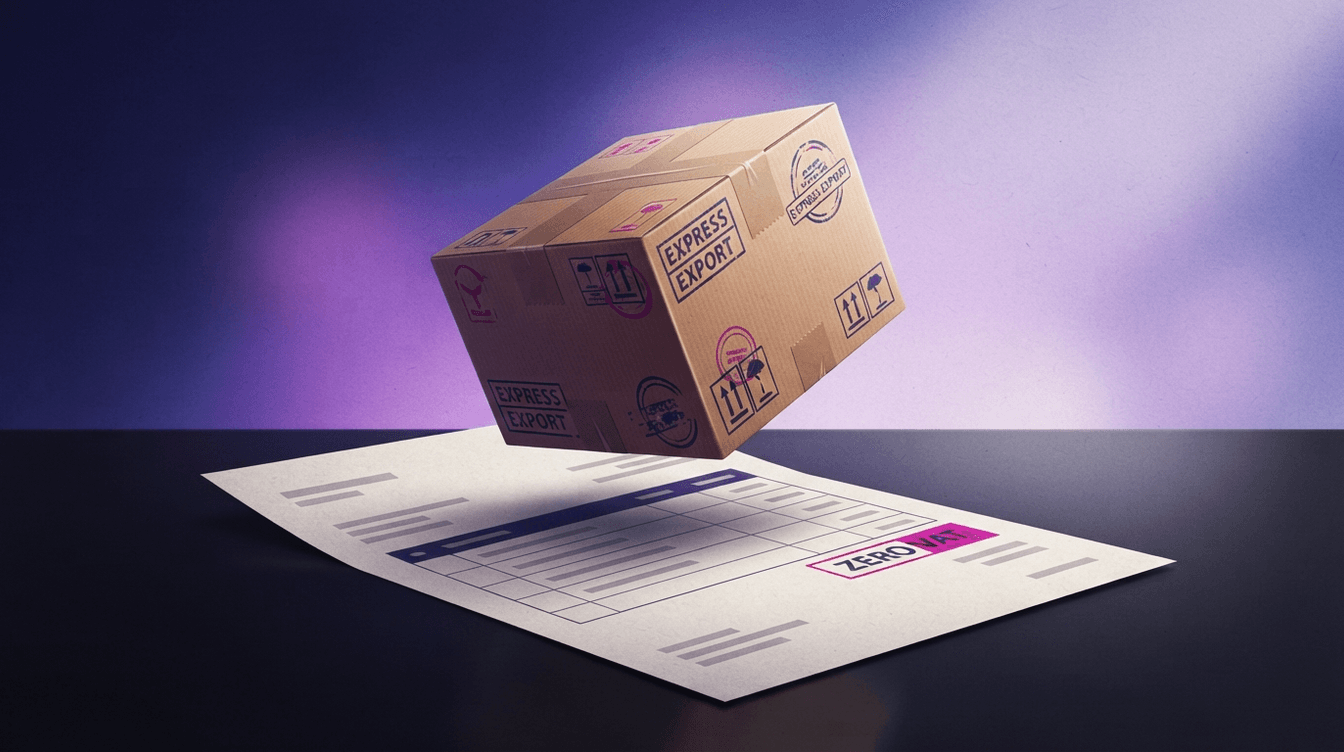
Micro-Export with ETGB: The Most Practical Way to Open Up to Global Markets
Thanks to the opportunities offered by the internet, you are no longer limited to selling only to the local market. For SMEs, e-commerce sellers, and freelancers in Turkey, sending products abroad no longer requires the complex bureaucratic processes of the past. While traditional customs declarations, consultancy fees, and warehouse costs used to intimidate small-scale businesses, the Electronic Commerce Customs Declaration, known as ETGB, has completely changed this equation.
If you are sending orders to customers abroad via platforms like Etsy, Amazon, and Shopify, or through your own website, you must fully understand micro-export rules to keep your operations legal and profitable. In this comprehensive guide, we cover the 300 kg and 15,000 Euro limit for shipments made via cargo companies, the correct steps for issuing export invoices, and the much-discussed VAT refund process at the end of the operation in all its details.
What is Micro-Export and How Does the ETGB System Work?
Micro-export is a simplified customs regime that allows goods with a value not exceeding 15,000 Euros and a weight not exceeding 300 kilograms to be shipped abroad quickly via authorized cargo and courier companies without the need to hire a customs broker. In micro-export, the paperwork that can take days at customs in traditional exporting is replaced by an electronic environment.
The system is built on these fundamental elements:
- Authorized Cargo Agency: Transactions are carried out through authorized express cargo companies that have indirect representation authority.
- ETGB Document: An electronic document that replaces the customs declaration is generated. This document officially proves your export.
- Cost Advantage: Since you do not pay customs brokerage fees, your operational costs remain at a minimum.
- Foreign Currency Revenue: Payments received from abroad legally enter your business accounts as commercial income.
- Stock and Warehouse Integration: It works simultaneously with digital pre-accounting systems, allowing for instant tracking of product costs.
- Easy Return and Exchange Management: Customs procedures for returns from international customers are resolved much faster.
Micro-Export and Traditional Export Comparison Table
You can clearly see which method you should choose based on your business volume in the comparison table below. This table provides a critical roadmap, especially for sellers who issue invoices on international marketplaces.
| Criteria | Micro-Export (ETGB) | Traditional Export |
|---|---|---|
| Upper Limit | 300 kg and 15,000 Euro | No limit |
| Customs Broker | Not required (Handled by cargo company) | Mandatory |
| Process Speed | Very fast (Exit within hours) | Can take days |
| Cost | Low | High |
| Paperwork Burden | Minimum (Electronic ETGB) | Intensive physical paperwork and approval |
| VAT Refund Process | Fast tracking with standard documents | Detailed sworn financial advisor report |
As can be seen from the table, micro-export is the first choice for small and medium-sized enterprises due to the speed and cost advantages in e-commerce operations.
Step-by-Step Micro-Export and Pre-Accounting Process
Following the steps you need to take in your pre-accounting system in the correct order when performing micro-exports ensures that you do not encounter problems during tax audits and lays the groundwork for you to receive your VAT refund without issues. The process works as follows:
- E-Invoice / E-Archive Issuance: An e-invoice or e-archive invoice is issued in the name of the buyer abroad with 0% VAT (as an exemption invoice). The invoice must include the buyer's full address, tax number (if any), and HS code (GTİP).
- Indirect Representation Authorization Certificate: An indirect representation authorization certificate is given to the cargo company you have an agreement with for micro-export. This document allows the cargo company to issue an ETGB on your behalf.
- Shipment of the Product: The product is handed over to the cargo company, and the cargo company performs the customs declaration as an ETGB.
- Obtaining the ETGB Number: When the transaction is completed, the cargo company sends you the ETGB reference number. This number is the primary evidence for accounting records and VAT refunds.
- Foreign Exchange Purchase and Rate Transactions: When the invoice amount is credited to the account in foreign currency, accounting records are closed based on the Central Bank's foreign exchange buying rate, and exchange rate differences are processed.
Example Scenario: Ms. Ayşe, a boutique bag manufacturer in Istanbul, sells a leather bag worth 500 Euros to a customer in Germany. When delivering the product to the cargo company, she requests that a micro-export declaration be opened. She issues her invoice with 0% VAT and forwards the ETGB document generated by the cargo company to her accountant. Thus, the sale is placed on a legal basis.
SME Case Scenario (Textile and Clothing Sector): 'ModaX Tekstil', a limited company operating in İzmir, sells women's clothing products mainly to the United States and the United Kingdom via Shopify and Etsy. The company ships an average of 220 packages per month. The average weight of each shipment is 1.2 kg, and the average basket value is 180 Euros. The total monthly micro-export volume reaches approximately 39,600 Euros.
ModaX Tekstil uses the Qolay.App pre-accounting system to manage this intensive operation. While e-invoices issued through the system are instantly integrated with foreign currency accounts, the HS codes (GTİP) of each order are automatically processed into invoice lines thanks to cargo integration. By uploading thousands of ETGB documents generated through the cargo company to the system with a single click, the company can recover the 20% raw material VAT accumulated at the end of each month from the tax office via offsetting. In this way, the company has saved an average of 45,000 TL per month in traditional customs brokerage costs and increased its operational speed by 300%.
Common Mistakes and Risks
Some mistakes made during micro-export processes can lead to businesses being penalized or failing to receive VAT refunds. Points you should pay attention to in order to avoid these mistakes:
- Wrong Invoice Type Selection: Accidentally issuing an invoice with the domestic VAT rate for international sales. The exemption invoice type must be selected, and the VAT rate must be 0%.
- Failure to Track ETGB: Not requesting the ETGB number from the cargo company or losing it. It is impossible to receive a VAT refund without the declaration number.
- Incomplete Buyer Information: Missing the buyer's country, full address, and tax identification information on the invoice.
- Exceeding Weight and Amount Limits: Attempting to send shipments exceeding the 300 kg or 15,000 Euro limit via micro-export. If these limits are exceeded, a standard customs declaration is mandatory.
- Incorrect Entry of HS Codes (GTİP): The shipment being stopped by customs officers due to incorrect declaration of product tariffs at customs.
- Incorrect Accounting of Exchange Rates: Not recording the exchange rate differences between the rate on the invoice date and the rate on the date the payment is credited to the account in the legal books.
Frequently Asked Questions
Is it mandatory to be a business owner for micro-export?
Yes, you must officially be a taxpayer (sole proprietorship, limited, or joint-stock company). You cannot perform regular commercial exports without individual tax liability.
How to get a VAT refund in micro-export?
You can apply for a VAT refund to the tax office you are affiliated with using the invoices issued under the exemption scope and the ETGB document. The refund process is carried out with a sworn financial advisor report or via offsetting/cash refund petitions.
Can every cargo company issue an ETGB?
Not every cargo company has the authority to perform micro-exports. You must work with international express cargo and courier operators that have indirect representation authority.
Do I have to bring my foreign currency earnings to Turkey?
It is a legal obligation for export proceeds to be brought into the country and recorded in commercial accounts through banks in accordance with the relevant legislation. You should coordinate the processes with your bank and financial advisor.
If my international customer wants to return the invoice, is the ETGB cancelled?
For returned products, the re-import procedure is operated through the cargo company. By obtaining the customs entry declaration or the relevant cargo return document for the returned product, a return invoice can be issued based on the previously issued export invoice, and accounting records are corrected accordingly.
Is it mandatory to be an e-invoice taxpayer for micro-export, or is e-archive sufficient?
It is mandatory for taxpayers who exceed the e-invoice transition thresholds determined by the Revenue Administration (GİB) to use e-invoices. However, businesses that are e-archive taxpayers can also issue 0% VAT exemption invoices to buyers abroad via the e-archive invoice system by complying with the basic rules. The important thing is that buyer information and ETGB reference matching are done completely.
Prepare Your Business for the Global Market
The micro-export process with ETGB becomes extremely easy and profitable with the right pre-accounting infrastructure and regular document tracking. To manage your sales from a single center, issue your invoices without errors, and keep your financial operations under control, you can strengthen your e-commerce accounting immediately by opening a free account on Qolay.App.
This article is for general information purposes. Tax legislation, notification thresholds, and application details are updated periodically; consult your financial advisor and GİB announcements for the status of your own business.
Related articles
Other guides close to this topic.
Converting Marketplace Orders to Invoices
Pull the Order, Let the System Generate the Invoice
Invoicing orders one by one from Trendyol, Hepsiburada, and other marketplaces takes days. We explained how to set up the store connection, how orders are converted into invoices, and their impact on stock.

Invoicing in Service Exports
Selling Software, Design, and Consultancy Abroad
What conditions apply to the VAT exemption on service invoices issued to overseas clients? We covered document types, foreign currency-earning service deductions, and the most common mistakes.

Regular Invoicing and Collection in Subscription Business Models
Automated Process Management for Monthly and Annual Recurring Revenue
Manage regular invoicing and automated collection processes in subscription business models in full compliance with pre-accounting and GİB regulations.