

VUK Communiqué 598: Abolition of the Information Slip and New Generation Cash Registers with e-Documents
With VUK Communiqué 598, the information slip practice in retail is changing fundamentally. Here is what you need to know to ensure financial compliance of new generation cash register and e-document processes.
On this page
For retail businesses, restaurants, stores, and all taxpayers accepting payments at physical locations, the in-store document layout has been one of the most critical operations for years. The nature of the receipt given to the customer, the moment of invoice issuance, and the legal status of documents printed through New Generation Cash Registers (YN ÖKC) are always among the first items examined during Revenue Administration (GİB) audits. However, there has long been operational confusion in the field: for transactions where the invoice is issued electronically afterward or simultaneously, printing an 'information slip' (bilgi fişi) from the device and circulating it as an actual delivery document.
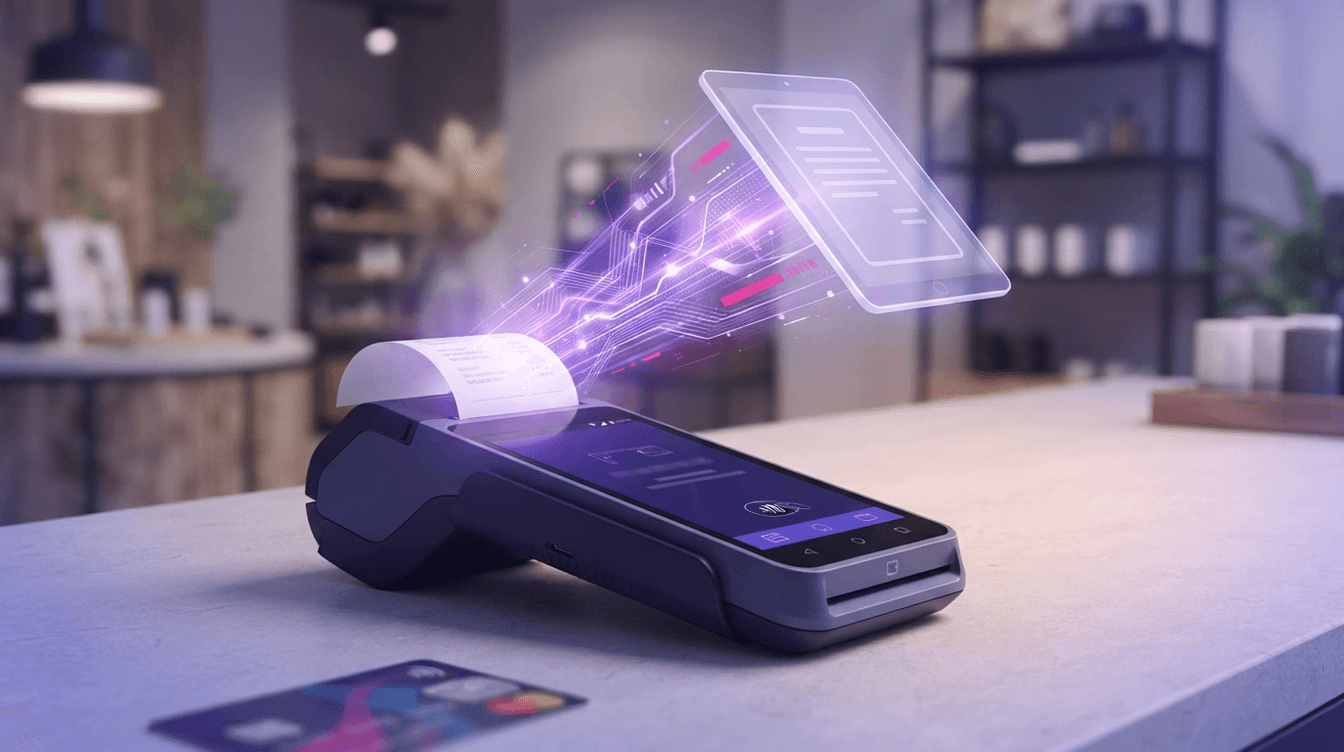
With the Tax Procedure Law General Communiqué (Serial No: 598) published by the Ministry of Treasury and Finance Revenue Administration, this dual structure in retail has been fundamentally uprooted. The concept of the 'invoice information slip' or 'e-invoice information slip,' which businesses have printed out from the device alongside the bank POS slip for years when issuing e-Invoices or e-Archive Invoices, is being abolished to prevent tax leakage in the field, end the circulation of fake receipts, and establish a single standard for technical integration. Now, cash registers are no longer just collection tools, but are becoming direct producers of financial documents or verification mechanisms.
In this comprehensive guide, we cover in detail the concrete obligations that TPL Communiqué 598 brings to your daily store operations, the new document order that emerges with the elimination of the information slip, how YN ÖKC must communicate with corporate pre-accounting software, and the operational steps you need to take to avoid penalties.
What is the TPL 598 Communiqué and What is Its Purpose?
The main goal of the regulations enacted by GİB is to make the data flow between the physical retail sales point and the Revenue Administration's information processing systems real-time and uninterrupted. In the old system, when a consumer made a purchase from a store and requested an invoice, the cashier would print an 'Invoice Information Slip' via the YN ÖKC and then generate an e-Archive Invoice through the pre-accounting or e-document portal. However, in practice, this led to abuses such as customers mistaking these information slips for legally valid receipts, or invoices being subsequently canceled in the system or never issued at all.
With the TPL 598 Communiqué, the printing of information slips is terminated and replaced by an architecture with fully digital verification where the device can directly issue e-documents or instantly match with GİB-approved systems. The main rules introduced by the communiqué are:
- Removal of the Information Slip Format: The production of temporary 'information slip' paper printouts from YN ÖKCs that replace an invoice or claim that an invoice has been issued is put to an end.
- Direct e-Archive Invoice / ÖKC Receipt via YN ÖKC: Depending on the type of sale, devices will either directly generate legally valid ÖKC Retail Sales Receipts or communicate with the integrator API in the background to directly issue an e-Archive Invoice and provide a QR-coded financial document printout. For details on the subject, you can review our cash register POS and e-archive invoice relationship guide.
- Mandate for QR Code and Document Verification: It is mandatory for the slip-format document coming out of the device to feature a QR code complying with GİB standards. When consumers scan this QR code with their smartphones, they must be able to directly access the verified invoice or financial record in GİB systems.
- POS and Cash Register Integrity: Audits regarding the independent operation of bank POS devices and fiscal cash registers, and the practice of pulling slips from external POS devices without issuing receipts from the cash register, have been maximized.
Comparison of the Old System and the New Cash Register System After TPL 598
To correctly structure the workflow between your store staff and accounting team, it is necessary to discuss old habits and the steps made mandatory by the communiqué in a comparative manner. The following table summarizes the operational change at the retail sales point:
| Criteria / Operation Step | Old Practice (Before Communiqué) | New System (Introduced with TPL 598) |
|---|---|---|
| Paper Document Given to Customer | An 'Invoice Information Slip' was printed from the YN ÖKC and given to the customer; the actual invoice was sent later via email. | Information slips cannot be printed. Either an instant fiscal ÖKC receipt is given, or an e-Archive Invoice copy containing a GİB-approved QR code is printed. |
| QR Code Integration | There were passive QR codes that were optional or supported only by certain device manufacturers. | Mandatory. Instant access to the verified document on the GİB portal when scanning the QR code is required. |
| Invoice - Collection Matching | Invoices in pre-accounting and POS slips were manually compared at the end of the day. | Sales, collections, and e-document records are locked in a single transaction with digital identity via YN ÖKC and integrator. |
| Cancellation and Return Procedure | Information slip cancellation could be done manually, and transactions without invoices could remain pending in the system. | A reverse entry is made accompanied by an expense note or return invoice, referencing the financial document transmitted to the GİB system. |
This radical transformation completely closes the era where behind-the-counter staff would send customers off with an information slip saying, 'We'll issue the invoice in the evening anyway.' Now, the type of document must be finalized at the moment of the transaction.
Step-by-Step Implementation: New Cash Register Tracking Order in Pre-Accounting
You do not need to get bogged down in complex software infrastructures to make your cash register and pre-accounting processes fully compatible with the TPL 598 communiqué. You can eliminate risks with a properly planned integration and cash register discipline. Here are 4 fundamental steps you need to implement in your business:
1. Update YN ÖKC Software and Manufacturer Parameters: Contact the manufacturer (or authorized technical service) of the new generation cash register and POS devices you use to have the latest software update within the scope of TPL 598 installed on the device. When this update is made, the 'Edit Information Slip' option in old menus will automatically become disabled or will be upgraded to GİB QR code standards.
2. Ensure e-Archive Integration with Cloud Pre-Accounting: For customers requesting an invoice at the register, your pre-accounting program and ÖKC device need to communicate via API. When the barcode is scanned, the sales invoice should be generated directly in the cloud, and the e-Archive approval number and GİB QR code should instantly return to the device at the register and be printed on the slip delivered to the customer.
3. Automate Daily Z-Report and POS Reconciliation: In the past, serious discrepancies occurred between the total financial amount in the end-of-day Z-report and bank POS totals due to information slips. In the new order, since every penny collected will correspond to either a fiscal receipt or an e-archive invoice, reconcile your end-of-day cash closing controls daily via POS reconciliation and commission tracking processes.
4. Train Cashier Staff on Document Types: Explain to your cashiers with a concrete template which menu step to follow from the device in cases where the customer requests a Tax ID Number (VKN) or National ID Number (TCKN). Inform the staff about the operational burden that canceling an incorrectly issued fiscal receipt at the end of the day will cause.
Example Scenario: You run a hardware store. A customer buys paint and hardware materials totaling 4,500 TL, requests an invoice on behalf of their company, and pays by credit card. In the old system, the cashier would charge the money from the external POS, print an 'invoice information slip' from the YN ÖKC and give it to the customer, and issue the invoice in the evening by looking at the Excel output. In the new system, however: the cashier enters the customer's tax ID from the pre-accounting screen and approves the sale, the e-Archive Invoice is generated instantly, the YN ÖKC completes the card collection, and prints the official fiscal delivery slip containing the invoice's GİB ETTN number and QR code, handing it to the customer. No additional processing is required in the evening.
Common Mistakes and Severe Penal Risks
GİB audit teams conduct unannounced inspections and cross-data checks at retail locations. Here are the most common misconceptions businesses fall into and mistakes you must avoid during the TPL 598 process:
- Making Document-Free Collections Using an External POS Device: Swiping cards on mobile bank POS devices not connected to the cash register and giving customers only a bank slip will result in special irregularity penalties for each transaction pursuant to the TPL. All collections must work integrated with the YN ÖKC.
- Issuing Word/Excel Draft Printouts Instead of Information Slips: Since information slips have been removed from the device, printing an 'order form', 'proforma', or 'delivery slip' resembling an invoice from your own computer and giving it to the customer as if it were a fiscal document can lead to the initiation of fake document and unregistered economy investigations.
- Ignoring Invoice Issuance Thresholds: For retail sales exceeding the mandatory invoice issuance limit determined annually according to the revaluation rate pursuant to the Tax Procedure Law, an invoice must be issued. Conduct your transactions by confirming current monetary limits from your financial advisor or GİB announcements.
- Failing to Track Lost or Erroneous e-Documents: e-archive invoices that remain pending in the system because they could not be transmitted to GİB servers due to reasons like internet outages at the moment of checkout. Businesses should regularly scan their queued invoices using e-archive invoice query and retrieval methods.
Frequently Asked Questions About TPL 598 and YN ÖKC
Has the information slip been completely abolished, are there any exceptions?
Yes, the TPL 598 communiqué has terminated the traditional invoice information slip format used in retail sales. Sales must either be directly concluded with a legal fiscal receipt or a QR-coded e-Archive Invoice printout must be generated via the integrated system and presented to the customer. Slip structures in special areas such as exceptional meal vouchers or parking lots are being transformed within the framework of technical guides determined by GİB.
What will be done if the customer does not want a printout of the invoice?
By obtaining the customer's email address or phone number, the e-Archive Invoice can be transmitted electronically (via email or SMS link). However, if the bank POS slip belonging to the collection made via YN ÖKC features a GİB-approved e-document QR code, handing this slip to the customer technically fulfills the paper delivery obligation.
Do I have to change my YN ÖKC device?
If your existing device can receive the software update required by the communiqué and its memory/QR printing capacity is sufficient for GİB standards, you do not need to replace your device. It is enough to simply have your device service install the latest TPL 598-compliant software. Very old-generation devices that do not support these standards in terms of hardware must be renewed.
What is the penalty for non-compliance with the communiqué?
Multiplier special irregularity penalties per transaction are imposed within the scope of duplicate articles 355 and 353 of the Tax Procedure Law on businesses that do not comply with the provisions of the communiqué, continue to issue information slips, or carry out sales without pairing the YN ÖKC with an independent POS device. Since the amounts of these penalties are increased each year at the revaluation rate, it is essential to consult your financial advisor for the current tariff.
Conclusion: Protect Yourself from Risks by Digitalizing Your Cash Register Processes
Although the Communiqué numbered TPL 598 may seem like an operational challenge for retail businesses at first glance, it is actually an important e-transformation step that error-proofs cash reconciliations, eliminates the risk of fake receipts, and perfectly synchronizes pre-accounting with the physical cash register. To prevent crowds at the register, avoid staff errors, and steer clear of tax penalties, leveraging modern cloud-based financial tools is no longer a luxury, but a necessity.
To manage your store sales, POS collections, and e-Archive Invoices from a single center in 100% compliance with legislation, you can instantly simplify your pre-accounting processes by opening a free account on Qolay.App.
This article is for general informational purposes. Tax legislation, communiqué limits, and application details are periodically updated; consult your financial advisor and GİB announcements for your own business's situation.
Try it after reading
Start applying what you read with Qolay.App — for free.
Related articles
Other guides close to this topic.

What is an E-Waybill and How to Issue It?
Not an Invoice, But the Goods' Travel Document
An e-waybill documents the shipment of goods; it does not replace the invoice. We explained when it is issued, its relationship with the invoice, how it affects inventory, and the issuing steps.

E-Invoice Integrator Selection
Portal, Integrator, Integration: Which One Is Right for You?
There are three ways to issue e-invoices, and the lowest cost is not always the most suitable. We compared the three methods and listed the questions you should ask when choosing an integrator.

What is an E-Receipt of Producer and Who Issues It?
The Document for Purchases from Farmers
Businesses purchasing goods from farmers who do not keep bookkeeping records must issue a document on behalf of the seller. We explained why the producer receipt exists, the withholding tax calculation, and the transition to the electronic process.