

Recipe and Packaging Cost for Boutique Pet Food and Treat Manufacturers
Track meat and vegetable consumption, long drying oven electricity, meat shrinkage, and doypack pouches with Qolay.App for boutique cat and dog treat manufacturers.
On this page
Surprise Costs in Natural Pet Treat Production
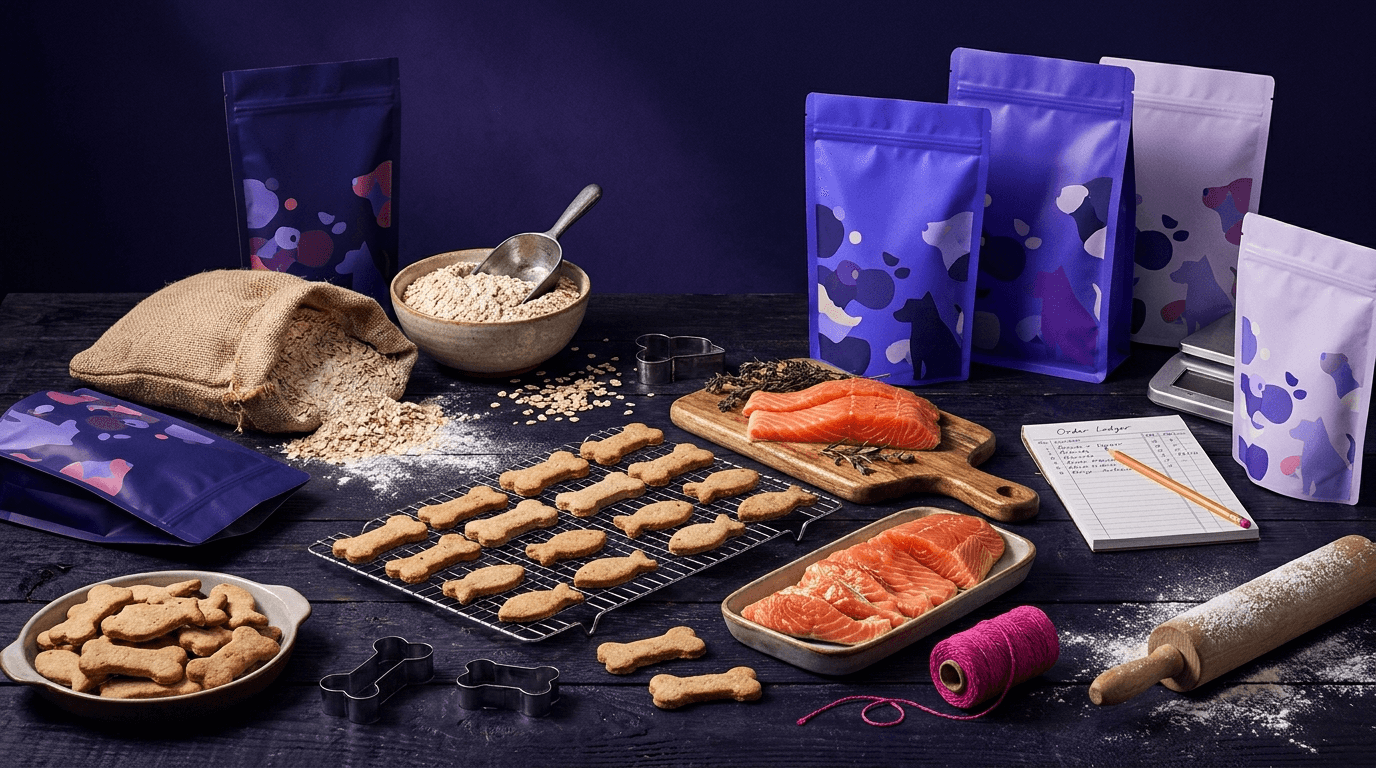
Additive-free dried meat, pumpkin, or salmon cat and dog treats have become a rapidly growing e-commerce and pet shop category. However, many entrepreneurs starting production in this field miscalculate their costs when they see that fresh meat loses water in the dehydration oven: to obtain a 100-gram pack of dried chicken treats, it takes an average of 300 grams of fresh chicken breast to be processed.
Moreover, drying ovens run continuously for 8–12 hours, creating serious electricity expenses; pieces that become overly dry and turn to dust during slicing result in waste; and in the final stage, placing an oxygen absorber sachet into each package and sealing it in a lockable doypack bag is a must. Setting a marketplace price without seeing each of these items in your recipe and production entry is risky.
Why Simple Recipes and Production Entries Instead of Heavy ERP and MRP?
Heavy ERP and MRP software designed for large industrial feed factories are both expensive and cumbersome for small and medium-sized businesses producing natural treats in boutique kitchens. What you need is the ability to easily set up recipes and record production batches in a single step within the basic accounting workflow where you input your butcher and packaging invoices.
Qolay.App is a basic accounting platform. The web and iOS/Android mobile applications work with the exact same simple Production Management screens. When you make a Production Entry in a single form, your meat, vegetable, oxygen absorber, and doypack bag stock automatically decrease; overly dry piece waste is added via Enter Waste; and the produced package stock is instantly reflected in your marketplace and e-commerce integration.
Realistic Scenario: 100 Packs of 100 g Dried Chicken Breast Treats
Let's assume 100 packs of 100 g Dried Chicken Breast Dog Treats are prepared in the workshop. Including the water loss share, 0.30 kg of raw chicken breast per pack has been processed into the recipe; the 1.00 kg broken piece loss resulting from slicing and over-drying has been recorded using the Enter Waste window:
| Cost Item (For 100 Packs) | Record Type | Quantity / Calculation | Amount (TL) |
|---|---|---|---|
| Raw Chicken Breast (Dehydration Input) | Component | 100 × 0.30 kg = 30.00 kg × 180 TL | 5,400.00 TL |
| Pumpkin & Oat Binder Mixture | Component | 100 × 0.04 kg = 4.00 kg × 50 TL | 200.00 TL |
| Raw Material Total | Subtotal | 5,400 + 200 | 5,600.00 TL |
| Long-Term Drying Oven Electricity | Additional Cost (Service–Percentage) | Raw material only (5,600 TL) × 15% | 840.00 TL |
| Slicing, Tray Arrangement & Packaging | Additional Cost (Service–Amount) | Fixed per batch (multiplication disabled) | 600.00 TL |
| Doypack Bag + Oxygen Absorber + Label | Additional Cost (Stock) | 100 pcs × 10 TL (multiplication enabled) | 1,000.00 TL |
| Slicing & Over-Drying Waste | Enter Waste | 1.00 kg Chicken × 180 TL (not included in 15% base) | 180.00 TL |
| Total Production Cost | Grand Total | 5,600 + 180 + (840 + 600 + 1,000) | 8,220.00 TL |
| Unit Package Cost | 100 Good Packages | 8,220.00 ÷ 100 | 82.20 TL / package |
While the meat and vegetable cost is 56 TL per pack, when 10 hours of drying electricity (15% = 840 TL), preparation labor (600 TL), doypack packaging with oxygen absorbers (1,000 TL), and 180 TL of meat waste are added, the actual unit cost becomes 82.20 TL. Therefore, selling prices determined solely by looking at the raw meat price cause hidden losses in the marketplace.
Step-by-Step Treat Tracking with Qolay.App
- 1. Set Up the Recipe (Production → Recipes): Define the amount of meat/fish for each treat or reward variety with its raw kilogram equivalent, including drying loss. Add the electricity percentage as Service–Percentage (%), labor as Service–Amount, and bags and oxygen absorbers as Stock additional costs.
- 2. Enter Production After Packaging (Production → Production Entries): Record production when 100 good packs are sealed; deduct over-dried or spoiled pieces with Enter Waste.
- 3. Check the Margin When Meat Prices Change (Production → Reports): When butcher or wholesaler invoices go up, the night FIFO engine updates the cost; open the "Show margin" option in the Recipe Cost report and immediately review your pet shop and marketplace prices.
- 4. Monitor Consumption and Waste Reports: Export Raw Material Consumption and Waste Report outputs to Excel for date ranges up to 366 days to compare waste rates of different meat cutting techniques.
5 Common Cost Mistakes in Pet Food Production
- Entering 100 Grams of Raw Meat for 100 Grams of Dried Product: Failing to account for drying loss reduces meat stock at three times the speed and makes the actual cost look 3 times lower.
- Leaving Oxygen Absorbers and Zip-Lock Bags Out of Costs: Special barrier bags and sachets used to prevent moisture should be defined as Stock-type additional costs.
- Not Including Long-Term Oven Electricity in the Recipe: The energy consumed by dehydration ovens is the most important operating cost after raw meat.
- Including Extra Label Costs for Trial Packs in the Main Recipe: When a special sticker is printed for an exhibition or campaign, it needs to be entered as an additional cost specific only to that production entry.
- Thinking Waste Amount Will Be Included in the Electricity Percentage: Service–Percentage (%) is calculated solely over the raw material total; meat loss entered via Enter Waste is not included in the rate base and is added directly to the total cost.
Frequently Asked Questions
What should I do if I produce packages in two different sizes, 50 g and 100 g?
50 g Pack and 100 g Pack are separate finished product stock cards. If you wish, you can first produce the "Dried Chicken (kg)" semi-finished product and then distribute it to both package sizes, or you can open separate recipes directly stating the raw meat amount for each package size.
Does the system allow me to produce an urgent batch before the chicken purchase invoice arrives?
Yes. If stock is insufficient, the system gives a warning but does not stop the record. When you process your purchase invoice, negative stock is corrected and the night FIFO engine finalizes the cost.
When does the marketplace integration see the newly produced package count?
As soon as the Production Entry is saved, finished product stock increases and your marketplace/e-commerce stock transfer automatically sees the updated stock.
Can I also track production records and waste reports from my phone?
Yes. All recipe, production entry, waste entry, and report screens on the web work identically on Qolay.App iOS and Android apps.
Secure Your Profitability in Natural Treat Production
Managing drying loss, energy, and packaging stocks on a single platform for boutique cat and dog treat manufacturers is the key to sustainable growth. For details, you can check out the Qolay.App Production Management page; additionally, you can read our articles on Waste Tracking in Nut Roasting and Packaging Workshops and Stock Synchronization in E-Commerce. The Production Management module is offered as a separate add-on in Qolay Market and comes with a trial period. Digitize your production immediately by opening a free account on Qolay.App.
This article is for general informational purposes. Check the Ministry of Agriculture regulations for animal feed/treat production permits and VAT rates, and consult your financial advisor.
Try it after reading
Start applying what you read with Qolay.App — for free.
Related articles
Other guides close to this topic.
Yarn Consumption, Labor, and Unit Cost in Small Knitwear and Weaving Workshops
Calculating Bobbin Yarn Consumption, Linking Labor, and Machine Setup Waste
Manage bobbin yarn consumption, linking and ironing labor, label stock, and machine setup waste in small knitwear and weaving workshops with Qolay.App.

Accounting Checklist for Opening a Business
What Not to Miss in the First Month
A few unrecorded transactions in the opening weeks can turn into a difficult mess to fix six months later. We've listed the steps to take in order.