

Yarn Consumption, Labor, and Unit Cost in Small Knitwear and Weaving Workshops
Manage bobbin yarn consumption, linking and ironing labor, label stock, and machine setup waste in small knitwear and weaving workshops with Qolay.App.
On this page
Cost Deviations in Knitwear Workshops Due to Unweighed Yarn Cones
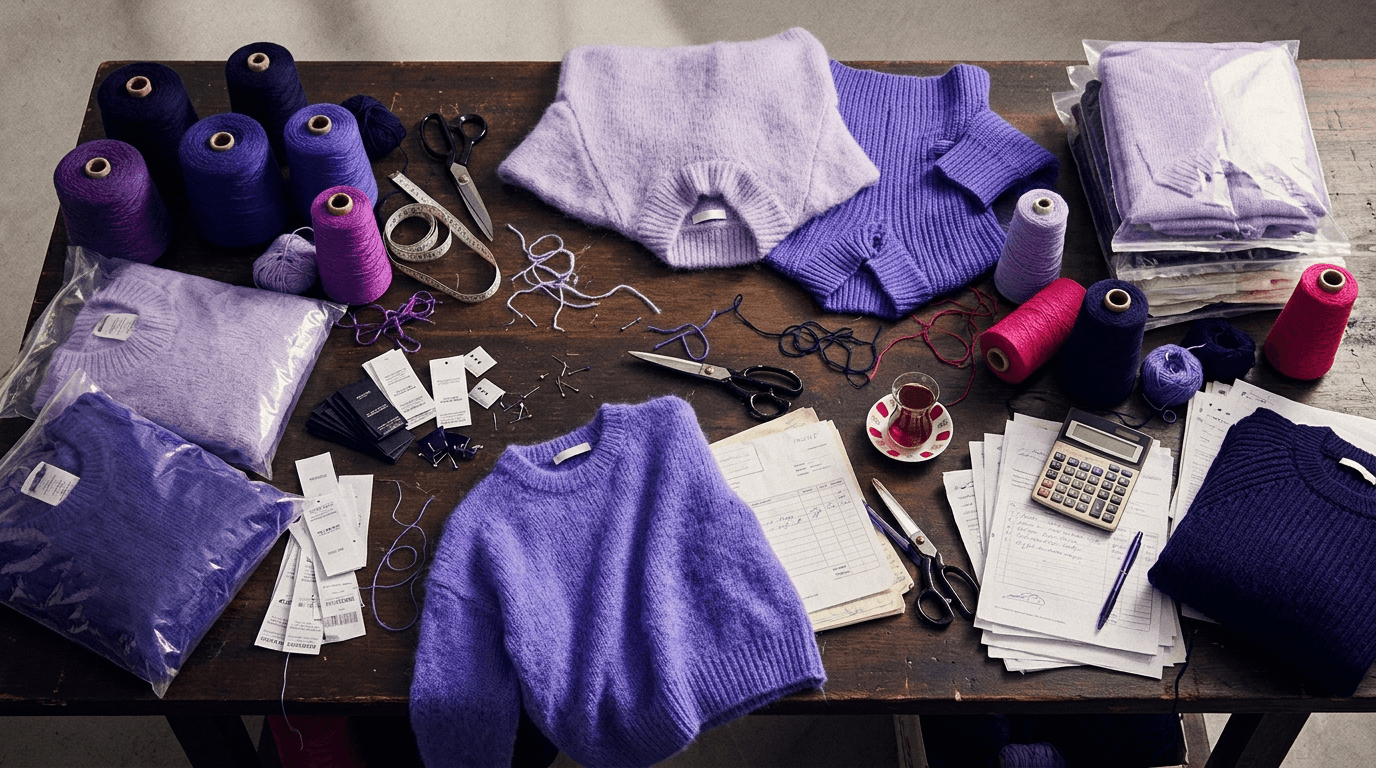
Cost calculation in small knitwear and knitting workshops differs from fabric-based operations; here, the raw input is not square meters, but cone yarn in kilograms. While the panels of a sweater or cardigan are being knitted on the knitting machine, setup panels, edge-trimming scraps, and yarn ends shed during linking (collar and sleeve joining) inevitably create waste.
In addition, after knitting is complete, washing, steam ironing, and linking labor are added to the cost; then, the product is prepared for shipment with a woven brand label, washing instructions, cardboard hang tag, and a ziplock textile bag. In the face of foreign exchange or raw material price hikes on yarn, it is impossible to set accurate prices without seeing each of these items separately.
Why Simple Recipes and Production Entry Instead of Heavy ERP and MRP?
ERP and MRP systems written for large textile factories disrupt the daily flexibility of a 5–25 person knitwear workshop with complex workstation charts, multi-step approval processes, and high setup costs. What a small knitwear manufacturer needs is to keep the sweater recipe in pre-accounting where they process the cone purchase invoice and easily record the produced batch.
Qolay.App is a pre-accounting platform. It offers the same simple Production Management screens on web and iOS/Android mobile apps: You open a single recipe per finished product; when knitting and ironing-packing are done, you make a Production Entry in a single form. You record the end-of-cone or cutting scrap yarn waste from the machine via the Enter Waste window.
Realistic Scenario: 50 Pieces of Cotton Crew Neck Knitwear Sweaters
Let's assume that 50 Cotton Crew Neck Knitwear Sweaters are produced in the workshop for a boutique brand. A single sweater consumes a net of 400 g of main yarn and 40 g of contrast ribbing yarn, plus 1.50 kg of yarn is wasted as machine startup and linking scraps:
| Cost Item (For 50 Sweaters) | Record Type | Quantity / Calculation | Amount (TL) |
|---|---|---|---|
| Combed Cotton Knitwear Yarn | Component | 50 × 0.40 kg = 20.00 kg × 300 TL | 6,000.00 TL |
| Collar & Sleeve Ribbing Yarn | Component | 50 × 0.04 kg = 2.00 kg × 350 TL | 700.00 TL |
| Woven Brand & Washing Label | Component | 50 × 2 pcs = 100 pcs × 3 TL | 300.00 TL |
| Raw Material Total | Subtotal | 6,000 + 700 + 300 | 7,000.00 TL |
| Knitting Machine Electricity & Maintenance | Extra Cost (Service–Rate) | Raw material only (7,000 TL) × 10% | 700.00 TL |
| Linking, Washing & Ironing Labor | Extra Cost (Service–Amount) | Fixed per batch (multiplication disabled) | 2,500.00 TL |
| Cardboard Tag + Ziplock Textile Bag | Extra Cost (Stock) | 50 pcs × 12 TL (multiplication enabled) | 600.00 TL |
| Machine Setup & Cutting Yarn Waste | Enter Waste | 1.50 kg × 300 TL (not included in 10% base) | 450.00 TL |
| Total Production Cost | Grand Total | 7,000 + 450 + (700 + 2,500 + 600) | 11,250.00 TL |
| Unit Sweater Cost | 50 Sound Units | 11,250.00 ÷ 50 | 225.00 TL / unit |
While the cost of yarn and inner labels alone is 140 TL per sweater; when machine electricity (10% = 700 TL), linking/washing labor (2,500 TL), bag-cardboard tag (600 TL), and 450 TL of yarn waste are added, the actual unit cost becomes 225.00 TL.
Step-by-Step Tracking in Knitwear Workshops with Qolay.App
- 1. Create the Recipe (Production → Recipes): Open a single recipe for each model and keep the yarn unit the same as the purchase invoice (kg). Define labor as Service–Amount, machine electricity/needle breakage allowance as Service–Rate (%), and bag and cardboard tags as Stock extra costs.
- 2. Enter Production After Washing-Ironing (Production → Production Entries): Record production in a single form when 50 sound sweaters are bagged. If special extra stones or embroidery were applied for the customer, you can add an extra cost line specific to that record; the main recipe remains unchanged.
- 3. Deduct Yarn Residue Separately (Enter Waste): Record the 1.50 kg of unusable yarn residue weighed at the end of knitting and cutting via the Enter Waste window. The consumption recipe is not disrupted, and you track wastage per model via the Waste Report.
- 4. Report Consumption and Profit Margin (Production → Reports): After the FIFO engine finalizes the cost at night, you can review the Raw Material Consumption and Recipe Cost ("Show margin") reports for up to 366 days and export them to Excel.
5 Common Cost Mistakes in Knitwear Workshops
- Forgetting the Cone (Cardboard Spool) Weight in Yarn Cones: If the cardboard spool allowance is not calculated in cones coming from the supplier with gross weighing, there will be a deviation in net yarn stock.
- Not Recording Sample and Machine Setup Waste: If the initial panels shed for machine setup at the beginning of the model are not deducted via Enter Waste, the yarn stock will look inflated.
- Treating Linking and Washing-Ironing Labor as Lump Sum: Not adding subcontracted washing and linking invoices to the production entry results in an incomplete selling price.
- Assuming Size Difference Grammages are Like a Single Size: If there is a serious yarn grammage difference between S and XXL sizes, opening a separate size finished product card instead of an average weight gives a more accurate cost.
- Entering Bags and Hang Tags as a Service Item: If you write packaging materials as Service–Amount instead of Stock, deductions will not be made from your bag stock, causing packaging shortages on the day of shipment.
Frequently Asked Questions
What should I do if I knit collar and sleeve cuffs as separate semi-finished products and then join them with the body?
First, you make a production entry for the "Knitwear Ribbing Set" semi-finished product and take it into stock; then you consume the body yarn and this semi-finished ribbing set as components in the sweater recipe.
How should I open recipes if I am producing 4 different colors of the same model?
Since each colored finished product has its own stock card, a separate recipe consuming its own colored cone yarn is defined for each color sweater; thus, color-based yarn stocks remain accurate.
Can I enter production during the day if the yarn invoice is issued at the end of the month?
Yes. In case of insufficient stock, the system gives a warning but does not block production; when you enter the yarn purchase invoice, negative stock is closed and the night FIFO engine finalizes the cost.
Can my accountant outside the workshop view production and waste records?
Yes. Accountants or users with the Read-Only role can view and print the 4 production reports (with Excel export up to 366 days) and Production Slip PDF documents without disrupting records.
See the Cost Born from Every Stitch Transparently
You can confidently set your collection prices by tracking yarn consumption, linking labor, and setup waste from a single place in knitwear and knitting workshops. For details, you can review the Qolay.App Production Management page; you can also check out our articles on Cost Tracking in Textile and Apparel Workshops and Cutting Waste Tracking in Leather Bag Workshops. The Production Management module is offered as a separate add-on in Qolay Market and the trial period is open. Take control of your workshop costs immediately by opening a free account on Qolay.App.
This article is for general informational purposes. Consult your financial advisor regarding VAT withholding and subcontracting documents in the textile industry.
Try it after reading
Start applying what you read with Qolay.App — for free.
Related articles
Other guides close to this topic.

Recipe Cost vs. Selling Price Comparison: Catching Unprofitable Products Early
Updating Prices After Price Hikes with the "Show Margin" Report
Learn how to detect products with eroding profit margins early and update your prices through recipe cost and selling price comparison.
Inventory Cost and Valuation Methods
Same Product, Different Purchase Price
When the same product is purchased at different prices, which price determines the cost of goods sold? We explain valuation methods and their impact on profit.

Price Updating, Replacement Cost, and Profit Protection under High Inflation
Pricing Without Falling into the Trap of Selling Inventory and Being Unable to Replace It
Develop accurate pricing strategies to protect your business capital and replace inventory during high-inflation periods. Secure your profit by optimizing your pre-accounting processes.