

Jar, Lid and Raw Material Costs in Jam, Sauce and Canned Food Manufacturers
Learn how to calculate fresh fruit and vegetable sorting waste, glass jars, twist-off lids, and cooking costs with Qolay.App for jam, tomato sauce, and canned food manufacturers.
On this page
Why Glass Packaging and Waste Determine Costs in Jarred Food Production
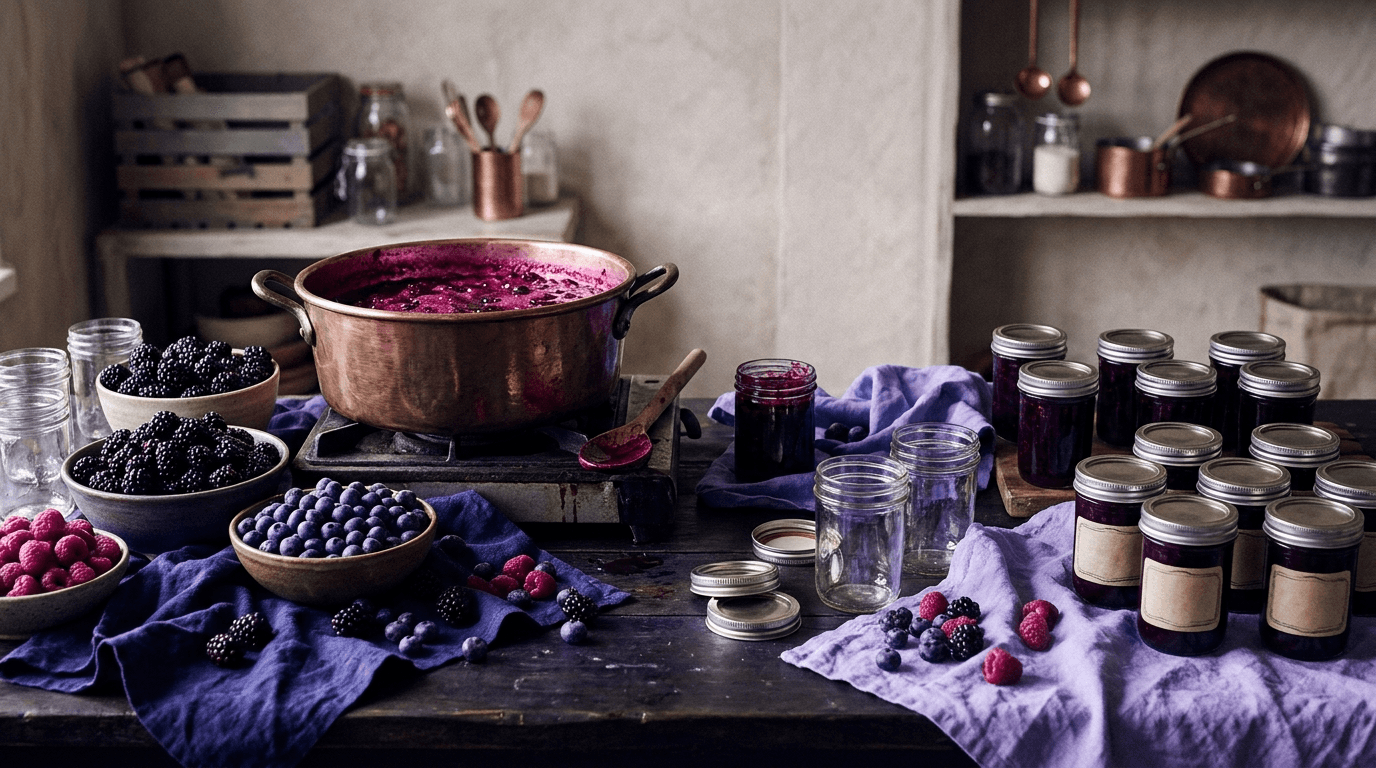
For small food businesses and e-commerce brands producing homemade jam, hot sauce, pickles, and preserves, profitability hits two invisible walls: one is the sorting and cooking waste of fruits and vegetables, and the other is the cost of glass jars, twist-off metal lids, safety bands, and labels. When strawberries bought by the crate in season have their stems and bruised parts removed, the weight drops; when the pot boils, the volume decreases due to evaporation.
On the other hand, for a 370 cc jar of jam sold on marketplaces, the cost of the glass jar + lid + label + shipping protector is often more expensive than the sugar inside. When these packaging items are not deducted from inventory and added to the net cost per jar, the business operates with almost zero profit after marketplace commissions and shipping deductions.
Practical Pre-Accounting and Recipes Instead of Complex Food Software
A boutique jam and sauce workshop does not need shift schedules, machine maintenance modules, or complex approval processes found in massive enterprise resource planning systems. The need is clear: define a clear recipe for fruit, sugar, and spices; deduct jars and lids from inventory; and enter the number of intact jars and sorting waste resulting after the pot boils from a single form.
The pre-accounting platform Qolay.App offers this process with the same simple screens on web and iOS/Android mobile applications through its Production Management module. Moreover, if you use e-commerce or marketplace stock integration, newly produced intact jars are automatically reflected in your sales channels as soon as you approve the production entry.
Numerical Example: Cost of 300 Jars of 370 cc Homemade Strawberry Jam
Let's outline the cost table for 300 pieces of 370 cc Homemade Strawberry Jam (product unit: Piece) produced in a single pot in a food workshop. Strawberries, sugar, and lemon juice/pectin are components; stem sorting and spill loss are entered separately from the Enter Waste window; the jar-lid-label set, pot cooking energy rate, and packaging labor are entered as additional costs:
| Cost Item | Qolay.App Item Type | Quantity × Unit Price | Total (TL) |
|---|---|---|---|
| Fresh Strawberries | Component (0.35 kg/piece) | 105 kg × 80.00 TL | 8,400.00 TL |
| Crystal Granulated Sugar | Component (0.20 kg/piece) | 60 kg × 38.00 TL | 2,280.00 TL |
| Lemon Juice & Pectin Mix | Component (0.01 kg/piece) | 3 kg × 240.00 TL | 720.00 TL |
| Component Subtotal | Total Food Raw Materials | 300 jars net consumption | 11,400.00 TL |
| Strawberry Sorting & Sugar Spill Waste | Enter Waste Window | 9 kg Strawberries (720 TL) + 2 kg Sugar (76 TL) | 796.00 TL |
| 370 cc Glass Jar + Metal Lid + Label | Additional Cost: Inventory (× Quantity enabled) | 300 pieces × 19.00 TL | 5,700.00 TL |
| Pot Cooking Natural Gas & Sterilization (5%) | Additional Cost: Service–Rate (5%) | 11,400.00 TL × 5% (component base only) | 570.00 TL |
| Filling, Vacuuming, and Boxing Labor | Additional Cost: Service–Amount (× Quantity disabled) | Fixed batch labor amount | 734.00 TL |
| Grand Total & Jar Cost | 300 Pieces of Intact Jars | 19,200.00 TL ÷ 300 pieces | 64.00 TL/jar |
In the table, the 5% cooking and sterilization energy is applied only to the total food raw material of 11,400.00 TL. The 796.00 TL sorting waste and 5.700.00 TL glass jar-lid cost are added to the total without entering the percentage base. Thus, the actual production cost per jar is calculated as 64.00 TL.
Step-by-Step Jam and Preserves Production Tracking with Qolay.App
- 1. Recipe Definition (Production → Recipes): Open a single recipe for each jar size and variety. Add fruit, sugar, and additives with their units in the product card (
kg) to the Components tab. Save glass jars, twist-off lids, safety bands, and labels asInventorytype ("Multiply by production quantity" enabled), cooking energy asService–Rate (%), and filling labor asService–Amount (TL)types. - 2. Production Entry and Fruit Waste (Production → Production Entries): When cooking and vacuuming are finished, enter the date, finished product, number of intact jars (300), and default company warehouse in a single form. Record bruised and stem waste resulting from fruit sorting with an explanation from the Enter Waste window. If the invoice for fresh fruit purchased from the wholesale market has not been processed yet, the system gives an insufficient stock warning but does not block the entry; the balance corrects when the purchase invoice is entered. If e-commerce/marketplace stock synchronization is enabled, new jar stock automatically goes to sales channels.
- 3. Receipt PDF and Profit Margin Control (Production → Reports): Following the instant cost, the FIFO engine finalizes the cost at night. You can get customizable Production Receipt PDFs for the production file; export Production Summary, Raw Material Consumption, Waste Report (up to 5,000 rows), and Recipe Cost reports showing your profit margin based on your marketplace sales price with the "Show margin" option up to 366 days to Excel. Manager/Standard users write; Accountant or Read-Only roles view and print.
4 Common Cost Mistakes in Jam, Sauce, and Preserves Production
- Calculating Fruit with Gross Purchase Weight: If 9 kg of stems and spoiled parts come out of 100 kg of strawberries purchased, and the net remaining amount per jar is not recorded with Enter Waste, the cost appears incomplete.
- Not Deducting Jars and Lids from Inventory: Glass jar and metal lid prices change frequently; not tracking these as inventory-type additional costs leads to sudden packaging stock-outs.
- Forgetting the Evaporation Rate: Sauces and jams lose water while boiling; the raw fruit and sugar amounts in the recipe must be tested and written according to the final cooked jar.
- Leaving Marketplace Prices Independent of Raw Materials: Failing to check margins in the Recipe Cost report when sugar or jars experience price hikes causes campaigns to result in losses.
Frequently Asked Questions
How do I deduct jar lids if they go to waste because they fail to hold a vacuum?
You can deduct the waste amount of the relevant raw material or lid inventory card by adding an explanation from the Enter Waste window on the Production Entry screen, ensuring it is reflected in the cost.
How should I set it up if I produce jars in different sizes (210 cc, 370 cc, 660 cc)?
Each jar size is opened as a separate manufactured product card and a single recipe is defined per product. Thus, the jar-lid stock and unit cost of each size are tracked without mixing with each other.
What reports and documents can my accountant view?
Users with Accountant and Read-Only roles can view and print all production entries, 4 production reports (with Excel output), and Production Receipt PDF documents.
Make Sales While Knowing the Net Profit of Every Jar
The way to maintain profitability in jam, sauce, and preserves production is to gather all items, from fresh fruit waste to glass jar inventory, in a single center. For more information on e-commerce stock integration and Excel exports, you can check out our articles on Stock Synchronization in E-Commerce and Hidden Mistakes in Production Cost and Recipe Tracking with Excel.
For module details, visit the Qolay.App Production Management page and open a free account on Qolay.App right away to try this module, which has an open trial period in Qolay Market.
This article is for general informational purposes. Tax legislation, food VAT rates, and accounting details are updated periodically; consult your financial advisor for your business's specific situation.
Try it after reading
Start applying what you read with Qolay.App — for free.
Related articles
Other guides close to this topic.

Qolay.App Production Management: Recipes and Costs in 3 Steps for Small Manufacturers
Simple Recipes, Production Entry, and Reporting for Workshops, Cafes, and E-Commerce Manufacturers
Learn how to create recipes, enter production data, track waste, and analyze unit costs in three steps with the Qolay.App Production Management module, developed for small and medium-sized businesses.
Yarn Consumption, Labor, and Unit Cost in Small Knitwear and Weaving Workshops
Calculating Bobbin Yarn Consumption, Linking Labor, and Machine Setup Waste
Manage bobbin yarn consumption, linking and ironing labor, label stock, and machine setup waste in small knitwear and weaving workshops with Qolay.App.