

A Guide to Reading Balance Sheets and Income Statements for Entrepreneurs
The nuances of reading balance sheets and income statements for SMEs and entrepreneurs. See 6 critical signals from financial statements.
On this page
A Guide to Reading Balance Sheets and Income Statements for Entrepreneurs
While growing your business, is the only metric you focus on usually the instant balance in your bank account? Many entrepreneurs try to understand how much they earned at the end of the day or how much debt burden their company is actually under just by looking at bank statements. However, this approach causes you to see only the tip of the iceberg. To fully comprehend the health of your company, make the right moves for the future, and anticipate potential financial crises, you must learn to read financial statements.
In this comprehensive guide, without getting bogged down in jargon, we will address the nuances of reading balance sheets and income statements by focusing directly on the growth of your business. If you have question marks in your mind about basic pre-accounting processes, this article will fundamentally change your perspective on financial statements and enable you to back up your decisions with data. Taking a financial X-ray of your business is a vital step for the sustainability of SMEs of all sizes, not just large corporate enterprises.
Under today's economic conditions, many entrepreneurs who fail to manage their cash flow are forced to halt operations even though they appear profitable. At this precise point, the balance sheet and income statement become your business's compass. After reading this guide, you will understand much more clearly what is said in meetings with your financial advisor or finance team, and you will be able to make your own strategic decisions with peace of mind.
Basic Framework: What Are a Balance Sheet and Income Statement?
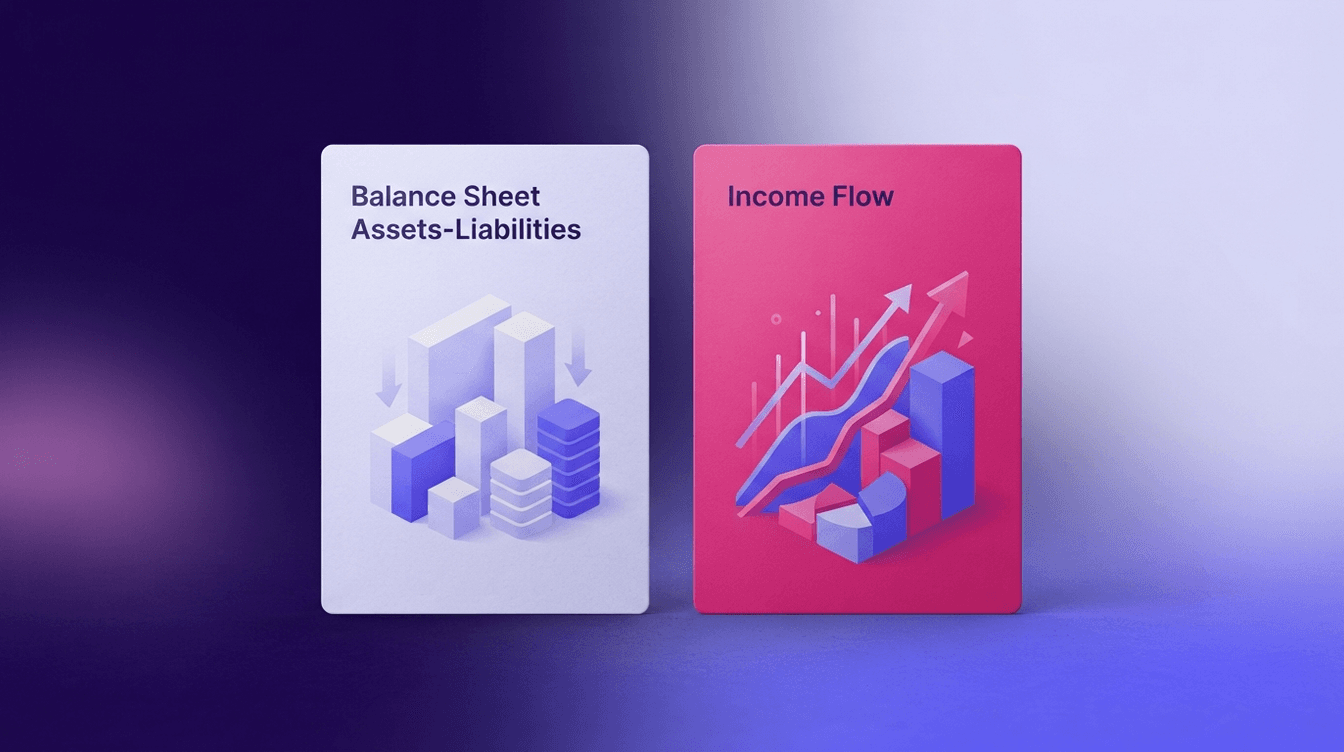
Financial statements are the financial language of your company. To speak this language, we first need to clarify what two basic documents mean: the Balance Sheet and the Income Statement. While the balance sheet takes a snapshot of your business at a specific date, the income statement provides a film strip for a specific period (for example, from the beginning of the year to date).
- Balance Sheet (Assets and Liabilities Balance): It is a snapshot status report that shows the assets your company owns (assets) and the resources with which you finance these assets (liabilities).
- Income Statement (Profit and Loss): It is a statement showing how much sales your company made, the cost of these sales, and the net profit or loss obtained as a result of operations on a periodic basis.
- Trial Balance Check: Do not forget that before conducting a detailed examination, you should regularly analyze the debit and credit balance of all accounts by performing a trial balance check.
- Periodicity Principle: Ensuring that revenues and expenses are recorded in the period to which they belong is the cornerstone of reading an income statement accurately.
- Equity Strength: Monitoring the share of the net value remaining after paying off the company's debts within total assets demonstrates the financial resilience of the company.
These books, kept in compliance with GİB regulations, determine the official financial posture of your business. However, these statements are not only for tax declarations but also the greatest guide for your strategic decisions. Seeing where each item is spent during your business's growth phase is the safest way to maintain financial discipline.
Financial Signals and Comparison Table
When you look at financial statements, instead of complex figures that intimidate you, you need to hear the voice of the company. In the table below, we have summarized in detail the critical signals an entrepreneur should see in financial statements and what these signals mean.
| Critical Signal | Related Statement | What Does It Mean? |
|---|---|---|
| 1. Liquidity and Cash Ratio | Balance Sheet (Assets) | Shows whether the cash in hand and in the bank is sufficient to pay short-term debts. |
| 2. Accounts Receivable Collection Period | Balance Sheet | Reveals the average number of days it takes for your customers to pay their invoices. |
| 3. Inventory Turnover Speed | Balance Sheet and Income Statement | Indicates how long the goods in your warehouse stay on the shelf and how quickly they convert into cash. |
| 4. Short vs Long-Term Debt Balance | Balance Sheet (Liabilities) | Shows whether the majority of debts will be paid immediately or spread out over time. |
| 5. Gross Profit Margin | Income Statement | Determines how much above its cost you sell your product or service. |
| 6. Core Operational Profitability | Income Statement | Shows whether the company truly makes a profit from its main business, or if side revenues mask the situation. |
| 7. Financing Expense Ratio | Income Statement | Reveals the extent to which loans and interest used erode the company's profitability. |
| 8. Return on Equity | Balance Sheet and Income Statement | Shows how efficiently the capital contributed by partners to the company is operated and generates growth. |
A business owner who regularly tracks these eight signals is minimally affected by market fluctuations and knows clearly what move to make in times of crisis.
A Realistic SME Case Scenario: The Transformation of Alfa Ticaret
Let's reinforce theoretical knowledge with a concrete example. Consider a wholesale food company with 15 employees: Alfa Ticaret. The company made a revenue of 10,000,000 TL in the first 6 months of the year and declared a net profit of 1,500,000 TL on its income statement. Its owner, Mr. Ahmet, thought things were going great when he saw this statement. However, when we look at the balance sheet for the same period, the picture changes.
Under the asset side of the balance sheet, the "Accounts Receivable" item appears as 4,200,000 TL. In other words, almost half of the 10 million sales made by Mr. Ahmet is still in the pockets of customers and has not been collected. On the other hand, on the liabilities side, short-term debts to suppliers reached 3,800,000 TL. In the bank account, there was only 45,000 TL cash left.
Result and Action Taken: Instead of being deceived by the profit on the income statement and leasing a new company vehicle, Mr. Ahmet read the balance sheet signals, urgently established a collection department, offered an early payment discount model to his customers, and optimized supplier maturities. In just 3 months, the trade receivables turnover period decreased from 90 days to 45 days, and the bank cash reserve reached a level that relieved the company. This case clearly proves that reading the balance sheet is far more critical than profit on paper.
Monitoring Routine in Pre-Accounting and Step-by-Step Implementation
Examining financial statements only at the end of the month or year through printouts from your financial advisor is a big mistake. To establish a real-time control mechanism, you must adopt daily and weekly pre-accounting habits. Here is the step-by-step path you should follow:
- Step 1: Process Income and Expenses Daily. Record your sales invoices, e-commerce marketplace deductions, and supplier invoices into the system immediately.
- Step 2: Match Bank Transactions. Make sure to check at the end of the day which invoice each amount arriving in your account belongs to.
- Step 3: Track Inventory Live. If the cost of goods sold is not deducted instantly, the gross profit figure in your income statement will be completely misleading.
- Step 4: Get Weekly Reports. Every Monday morning, review a brief report summarizing the cash inflows and outflows of the previous week.
- Step 5: Classify Expense Items. Track your fixed and variable costs separately to see where you can save.
Sample Scenario: Let's say you operate in the field of e-commerce. Your turnover looks very high, but you have no money in the bank. If the "Accounts Receivable" item under assets in the balance sheet is inflated, you understand that the money from marketplaces has not been deposited into your account yet or that you made sales to customers with very long maturities. This immediately signals you to review your collection policy.
Common Mistakes and Financial Risks
There are some common pitfalls entrepreneurs fall into when examining or preparing financial statements. These mistakes can cause even a seemingly profitable business to come to the brink of bankruptcy in a short time:
- Confusing Revenue with Profit: Making many sales does not always mean earning a lot of money. Sales made at high costs do not grow the business, they only increase the burden.
- Not Separating Personal and Business Finances: Making personal expenses out of the company cash balance disrupts the partners' current account on the balance sheet and hides the true financial position.
- Not Seeing Taxes and Social Security Premiums as Debt: Accrued but unpaid taxes appear among short-term liabilities on the balance sheet and create an urgent need for cash.
- Forgetting Depreciation and Hidden Expenses: Failing to account for the wear and tear of fixed assets creates a misleading optimism by showing net profit higher than it actually is.
- Ignoring Foreign Exchange Losses: Failing to periodically calculate how foreign currency debts or receivables are affected by exchange rate fluctuations can cause surprise deficits.
The way to avoid these risks is not to compromise on financial discipline and to instill the importance of pre-accounting in the entire team.
Frequently Asked Questions
Is it mandatory to know accounting to read a balance sheet?
No, you do not need to know detailed journal entries. It is sufficient to understand the basic logic: that assets show your resources, and liabilities show where these resources come from.
Will I not pay taxes if I see a loss on the income statement?
Seeing a net loss on the income statement may mean that corporate or income tax will not arise for that period; however, VAT and certain fixed taxes may still be paid based on turnover or periodic laws.
Why must total assets and liabilities always equal each other?
Because this is the fundamental accounting equation. Every asset you own (asset) is financed either by your equity or your debts (liability); therefore, the two sides always balance each other.
How often should I review my financial statements?
Tracking pre-accounting data on a weekly basis and reviewing the income statement and balance sheet with your financial advisor at the end of every month is the healthiest method.
How does inflation accounting affect my financial statements?
Inflation accounting allows non-monetary assets (fixtures, inventory, etc.) to be adjusted according to changes in purchasing power. This practice helps companies see their true equity structure and get rid of profits disguised misleadingly.
How are hidden costs in financial statements identified?
General administrative expenses, marketing expenditures, and financing costs should be examined in detail in the sub-items of the income statement. By obtaining category-based reports through your pre-accounting software, you can immediately identify out-of-budget expenditures.
Take Control of Your Company's Financial Future
Reading financial statements is not about solving a complex math problem; it is about reading the story of your business correctly. When you act with accurate data, you can take solid steps beyond your intuition. By opening a free account on Qolay.App, you can easily manage your pre-accounting processes, track your income and expenses from a single screen, and prepare for your financial statements.
This article is for general informational purposes. Tax legislation, communique thresholds, and implementation details are updated periodically; consult your financial advisor and GİB announcements regarding your own business's situation.
Try it after reading
Start applying what you read with Qolay.App — for free.
Related articles
Other guides close to this topic.
Free Pre-Accounting Software
See What's Included When We Say "Free"
In most free pre-accounting software, core features are locked. We've clearly outlined what's in Qolay.App's free plan, where the limits begin, and at what point you need to upgrade to a paid plan.
Transitioning from Excel to Basic Accounting Software
When to Switch and in What Order to Migrate Your Data
Excel only gets you so far. We break down the signs that it's time to make the switch, the correct order for migrating your data, and the most common pitfalls to avoid during the transition.

Do I Have to Keep Preliminary Accounting? Who Needs It?
Legal Obligation and Commercial Necessity Are Not the Same Thing
There is no specific law that says "you must keep preliminary accounting." However, you do have obligations to issue documents and maintain books. We wrote about where the two intersect and what you need to do based on your business type.