

Dough (Semi-Finished) and Material Cost Management in Pizzerias and Pide Shops
Learn how to clarify material costs, waste, and profit margins in pizzerias and pide shops by first producing dough as a semi-finished product and then using it in pizza and pide recipes.
On this page
Why Do Cost Calculations Often Go Off Track in Pizzerias and Pita Shops?
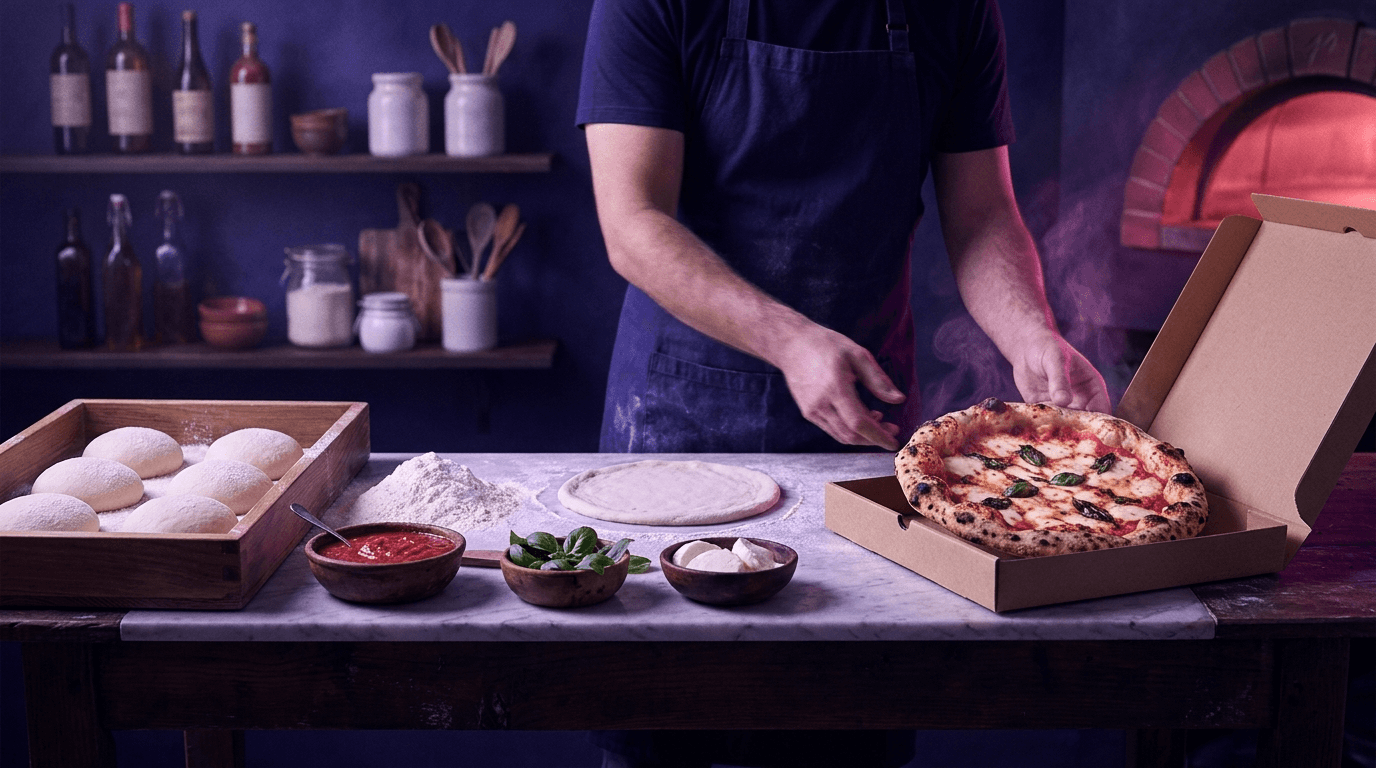
In a pizzeria or pita salon, the ovens might run non-stop all day and every table might be full. Yet, when the flour, mozzarella, sucuk, and natural gas bills land on the desk at the end of the month, profits often fall short of expectations. There is a single reason behind this: treating a two-stage kitchen production process as if it were a single item. The dough kneaded in the morning is actually a semi-finished product on its own; throughout the day, that dough is used to bake various types of pitas and pizzas in different weights.
It is impossible to measure the true portion profitability of the sauce or cheese placed on top without clarifying the cost of the dough. When torn dough portions on the counter, burnt edges in the oven, and cardboard delivery boxes are left out of the equation, pricing becomes a matter of guesswork. The solution isn't struggling with complex software, but rather recording both the semi-finished product and the final item in a streamlined workflow within your basic accounting routine.
Why Choose Streamlined Recipes and Production Entries Over Heavy Systems?
A small bakery, pita shop, or pizzeria does not need enterprise resource planning software designed for massive factories. The kitchen staff has no time to waste on lengthy bureaucratic forms or machine station approvals. Master bakers knead the dough in the morning, slide pizzas into the oven according to orders all day long, and want to see end-of-day inventory in the evening.
Qolay.App is a cloud-based basic accounting platform designed for the fast pace of small businesses. Its Production Management module operates on a straightforward logic: instead of setting up automated sub-production chains, you first bring the semi-finished dough into stock with a single production entry, and then use that dough directly as a component in your pizza and pita recipes. Since the web and iOS/Android mobile apps share the exact same interface, you can enter records instantly whether you are at the register or in the kitchen.
Sample Calculation: The Cost of 50 Mixed Pizzas (30 cm) from 20 kg of Dough
Let's set up a two-stage daily kitchen scenario with concrete figures to see how costs are built. In the first stage, 20 kg of Pizza Dough (Semi-Finished) is prepared in the morning. Since units in product cards are opened as kg and lt, the quantities in the recipe are entered using these exact units:
- Components (20 kg Dough): 12 kg Type 00 Flour (32.00 TL/kg = 384.00 TL) + 0.20 kg Fresh Yeast (180.00 TL/kg = 36.00 TL) + 0.50 lt Olive Oil (320.00 TL/lt = 160.00 TL) + 0.25 kg Sea Salt (40.00 TL/kg = 10.00 TL) = 590.00 TL.
- Additional Cost (Service–Amount): Kneading machine electricity and water share (multiply by quantity disabled) = 50.00 TL.
- Semi-Finished Unit Cost: Total 640.00 TL ÷ 20 kg = 32.00 TL/kg.
In the second stage, 50 mixed pizzas (30 cm) are produced during the day using this semi-finished product. In the table below, you can examine how components, separately entered oven waste, and different additional cost types combine to form the total unit cost:
| Cost Item | Type / Category | Quantity & Unit Cost | Total (TL) |
|---|---|---|---|
| Pizza Dough (Semi-Finished) | Component (0.25 kg/piece) | 12.50 kg × 32.00 TL | 400.00 TL |
| Tomato Sauce | Component (0.10 kg/piece) | 5.00 kg × 90.00 TL | 450.00 TL |
| Mozzarella Cheese | Component (0.14 kg/piece) | 7.00 kg × 340.00 TL | 2,380.00 TL |
| Beef Sucuk | Component (0.08 kg/piece) | 4.00 kg × 480.00 TL | 1,920.00 TL |
| Cultivated Mushrooms | Component (0.05 kg/piece) | 2.50 kg × 140.00 TL | 350.00 TL |
| Component Subtotal | Raw Material + Semi-Finished | 50 pieces net consumption | 5,500.00 TL |
| Oven-Burnt Dough & Cheese | Enter Waste Window | 0.50 kg Dough (16 TL) + 0.25 kg Cheese (85 TL) | 101.00 TL |
| 30 cm Pizza Box + Wax Paper | Additional Cost: Stock (× Qty enabled) | 50 pieces × 14.00 TL | 700.00 TL |
| Stone Oven Natural Gas & Kitchen Supplies | Additional Cost: Service–Rate (10%) | 5,500.00 TL × 10% (component base only) | 550.00 TL |
| Master Baker Prep Share | Additional Cost: Service–Amount (× Qty disabled) | Fixed shift amount | 549.00 TL |
| Grand Total & Unit Cost | 50 Pieces Sound Output | 7,400.00 TL ÷ 50 pieces | 148.00 TL/piece |
Notice that the 10% stone oven energy share is applied exclusively to the raw material and semi-finished total of 5,500.00 TL. The 101.00 TL waste and 700.00 TL box costs are not included in the percentage base; they directly increase the total cost. Thus, the true boxed cost of a single pizza clearly comes out to 148.00 TL.
Step-by-Step Implementation with Qolay.App: From Recipes to Reports
You can set up this exact workflow in just a few minutes via the web or mobile app using the Qolay.App Production Management module:
- 1. Define Recipes (Production → Recipes): A single recipe is created for each finished and semi-finished product. Create the dough first, then the pizza. The default recipe quantity is 1; enter the components matching the product card units precisely (at least one component is mandatory). In the Additional Costs tab, add the box as
Stock("Multiply by production quantity" enabled), natural gas asService–Rate (%), and labor asService–Amount (TL). - 2. Production Entry and Waste Logging (Production → Production Entries): When the dough is kneaded in the morning, make the semi-finished entry with a single form. At the end of the day, open the pizza entry and select the date, finished product, and sound quantity (50); the default warehouse is the company warehouse. Record burnt dough and cheese via the Enter Waste Window by adding a note. If stock is insufficient, a warning appears, but the entry is not blocked; negative balances are resolved when the purchase invoice is processed.
- 3. Instant Costing, Nighttime FIFO, and Production Slip PDF: At the time of recording, instant costs are calculated based on FIFO order (latest purchase price if no stock, or 0 with a "No cost" warning if neither exists); the nighttime FIFO engine finalizes it. You can get a customizable Production Slip PDF with a single click.
- 4. Control via Reports (Production → Reports): You can export up to 366 days of Production Summary, Raw Material Consumption, Waste Reports (up to 5,000 rows), and Recipe Cost reports showing your profit margin with the "Show margin" option to Excel. Admin and Standard users can write; Accountant and Read-Only roles can view and print.
5 Common Cost Mistakes in Pizzerias and Pita Shops
- Failing to Track Dough as an Intermediate Product: Trying to distribute flour, yeast, and oil directly across pizzas makes remaining dough stock and the true cost of pitas in various sizes invisible.
- Leaving Portion Grams to Guesswork: When a recipe calls for 140 grams of mozzarella but the chef grabs 180 grams by hand, it means hundreds of kilos of cheese shortages and hidden losses every month.
- Hiding Waste in Consumption Lines: Adding burnt pitas or torn dough to the recipe consumption ruins the standard recipe; waste must always be recorded separately.
- Treating Boxes and Packaging as General Expenses: Pizza boxes, pita paper, and wet wipes are actual production inputs deducted from stock; viewing them as overhead makes unit costs look artificially low.
- Updating Menus with Old Purchase Prices: When cheese or meat prices go up, menus calculated with last month's prices wipe out profits, especially on commissioned online orders.
Frequently Asked Questions
Is dough automatically considered kneaded when producing pizza?
No, there are no automated sub-productions in Qolay.App. You must first create a production entry for the dough as a semi-finished product to bring it into stock, and then consume this dough as a component in pizza or pita production.
Can I enter a fixed waste percentage into the recipe?
There is no waste rate field on the recipe screen. Instead, you enter actual dough or material losses in each production entry through the separate Enter Waste Window, allowing you to track actual shrinkage rather than assumptions.
I haven't entered the flour or cheese purchase invoice yet; can I open a production entry?
Yes. When stock is insufficient, the system warns you but does not block the production entry. Once you process your purchase invoice later, the negative stock is corrected and the nighttime FIFO engine finalizes the cost.
Does the Production Management module come with the standard package?
Production Management is offered as a separate add-on module via Qolay Market, and a trial period is available for your business. You can check current access and trial options in Qolay Market within the app.
Clarify Your Kitchen's True Costs Today
The key to protecting profitability in pizzerias and pita shops is having a clear view of every gram and piece of waste, from the semi-finished dough to the final box coming out of the oven. To dive deeper into two-stage semi-finished product usage, check out our article From Semi-Finished to Finished: Stock and Cost Tracking in Small Businesses Using Intermediate Products, and for general restaurant financial flow, explore our guide on Basic Accounting and Cost Control for Restaurants and Cafes.
To discover all capabilities of the module, you can visit the Qolay.App Production Management page or start your trial period right away via Qolay Market by opening a free account on Qolay.App.
This article is for general informational purposes only. Tax legislation, accounting record rules, and application details are updated periodically; consult your financial advisor for your business's specific situation.
Try it after reading
Start applying what you read with Qolay.App — for free.
Related articles
Other guides close to this topic.
Seasonal Milk Price and Cost Tracking for Ice Cream and Dairy Dessert Manufacturers
Real-Time Monitoring of Milk Price Hikes, Boiling Loss, and Packaging Costs
Learn how to cost seasonal milk price hikes, pasteurization losses, and packaging containers with simple recipes in ice cream and dairy dessert production facilities.

Factoring and Receivables Discounting: How to Calculate the True Cost?
Protecting Profitability While Converting Post-Dated Checks and Invoices into Cash Early
Explore how to calculate factoring and receivables discounting costs, check-discounting processes, and methods to protect profitability on the Qolay.App corporate blog.