

Component Stock and Unit Cost in Small Electronics and Cable Assembly Workshops
Learn how to track PCB, connector, cable length, assembly scrap, and anti-static packaging costs with simple recipes in small electronic card and cable assembly workshops.
On this page
When a Single Connector is Missing, the Entire Card Delivery Waits
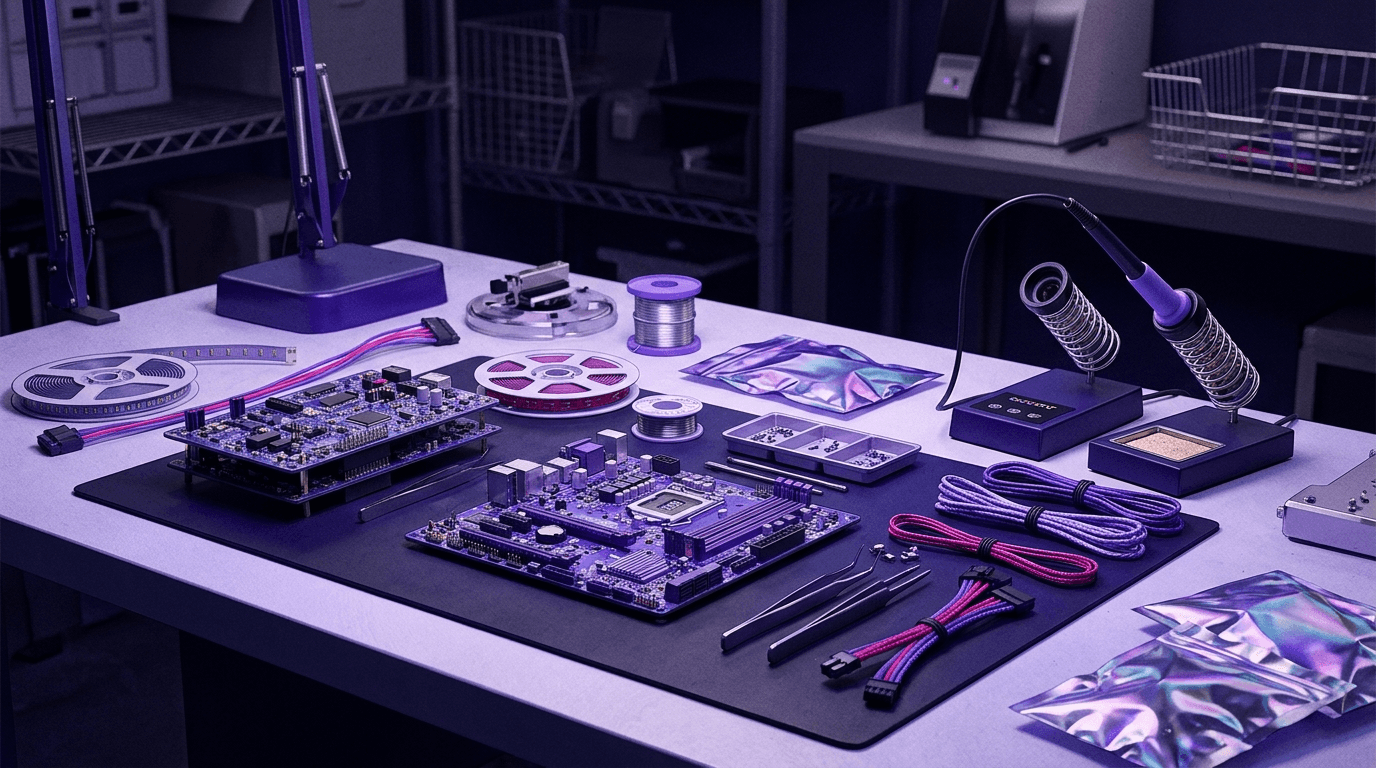
In small electronic assembly workshops producing automation panel cabling, LED driver modules, sensor boxes, or in-machine wire harnesses, the problem usually arises not with the main board, but with small components. For an order of 100 units, the assembled PCBs and plastic boxes are ready; however, because a waterproof connector or pin terminal runs out or breaks on the crimping bench, delivery is delayed for days. This happens because the actual consumption and crimping/soldering scrap of small components are not tracked regularly.
On the cost side, the rapid fluctuation of PCB, cable, and connector prices tied to exchange rates is a separate risk. B2B quotes given based on exchange rates from past import invoices can completely wipe out the workshop's labor profit when new component orders are placed.
Why a Simple BOM Instead of Heavy Electronic Manufacturing MRPs?
Heavy ERP and MRP systems sold to large electronics factories require reel barcode readers, SMT line scheduling, multi-station approvals, and complex serial/lot tracking screens. In a 5–25 person wire harness or module assembly workshop, craftsmen do not need that much bureaucracy. The workshop manager wants to see in a single recipe which PCB, how many meters of cable, how many connectors, and which box go into each module.
Qolay.App is a pre-accounting platform; its Production Management module is designed for simple SME manufacturing. Without serial/lot tracking or work order queues, you create your BOM, and once assembly and testing are complete, you make the production entry from a single form. Because the web panel and iOS/Android mobile apps offer the same interface structure, stock can be deducted right from the assembly bench.
Sample Cost Table: 100 Units of 24V Smart Relays and Cable Assemblies
Let's consider the production of 100 units of 24V Smart Relays and Cable Assemblies in an assembly workshop. The assembled main PCB, 4-core shielded cable, IP67 connector, and ABS box are defined as raw material components. 6 connectors and 5 meters of cable ends ruined during crimping and soldering tests were logged via Enter Scrap; soldering/test labor was added as Service–Rate, test jig setup as Service–Amount, and anti-static bags/boxes as Stock Extra Cost.
| Item Type | Component / Expense | Quantity (For 100 Units) | Unit Price | Total Amount |
|---|---|---|---|---|
| Raw Material | Assembled Main PCB Board (1 pc/product) | 100 pcs | 145.00 TL | 14,500.00 TL |
| Raw Material | 4-Core Shielded Cable (1.5 m/product) | 150.00 meters | 28.00 TL | 4,200.00 TL |
| Raw Material | IP67 Waterproof Connector (2 pcs/product) | 200 pcs | 32.00 TL | 6,400.00 TL |
| Raw Material | ABS Protection Box (1 pc/product) | 100 pcs | 39.00 TL | 3,900.00 TL |
| Subtotal | Raw Material Total | - | - | 29,000.00 TL |
| Enter Scrap (1) | Crimping Error IP67 Connector Scrap | 6 pcs | 32.00 TL | 192.00 TL |
| Enter Scrap (2) | Cable Stripping and End Cutting Scrap | 5.00 meters | 28.00 TL | 140.00 TL |
| Service–Rate | Soldering, Crimping, and Test Labor (10%) | 29,000.00 TL × 10% | - | 2,900.00 TL |
| Service–Amount | Test Jig Setup and QC (multiplication off) | 1 batch | 850.00 TL | 850.00 TL |
| Stock Extra Cost | Anti-Static Bag + Barcoded Box | 100 pcs (multiplication on) | 12.00 TL | 1,200.00 TL |
| Total | 100 Sound Modules | Unit: 342.82 TL/pc | - | 34,282.00 TL |
In the calculation, the 10% Service–Rate labor is applied only to the raw material total of 29,000.00 TL (2,900.00 TL); the 332.00 TL component scrap and 1,200.00 TL anti-static packaging stock do not enter the percentage base. When all costs are totaled, 34,282.00 TL is obtained, and when divided by 100 sound products, the unit cost comes out to exactly 342.82 TL.
Step-by-Step Implementation in Electronic Assembly with Qolay.App
- 1. Turn Sub-Assemblies into Semi-Finished Goods (Production → BOMs): If you first produce the "Soldered PCB" semi-finished product and then transform it into multiple final products with different cable lengths, since there is no automatic sub-production, first record the semi-finished production; then use this semi-finished product as a component in cable and box assembly.
- 2. Production Entry After Assembly and Test (Production → Production Entries): Enter the quantity of sound products that passed the test and were boxed. Process connectors broken with pliers or the crimping machine, cables shortened during stripping, and burnt components via the separate Enter Scrap window. After recording, attach the Production Slip PDF output to the quality file.
- 3. FIFO Update with New Import Invoices: Since components usually arrive indexed to foreign currency, the component cost is updated according to FIFO/latest purchase sequence as soon as you process your purchase invoice.
- 4. Supply Plan and Margin Control (Production → Reports): See how much of which connector or cable you need to order with the Raw Material Consumption report that you can pull for up to 366 days; verify the profitability of your B2B quote prices with BOM Cost ("Show margin").
5 Common Mistakes in Electronics and Cable Workshops
- Buying Cable by the Reel (100 m) and Trying to Deduct Meters in the BOM: If the stock card opens as a reel, since v1 does not have automatic unit conversion, the BOM gets confused; cable stock must be kept in meters from the start.
- Ignoring Crimp Terminal, Heat Shrink, and Solder Wire Consumption: Parts that appear cheap on a per-unit basis lead to unexpected stock shortages in mass production.
- Not Distributing Test and Quality Control Setup Time to Small Batches: In a 10-piece sample batch, test jig preparation significantly increases the unit cost; it should be added as Service–Amount (multiplication off).
- Forgetting Anti-Static Bags and Labels: ESD bags and safety labels should be tracked as Stock Extra Cost.
- Not Processing Cards That Fail Testing and Are Scrapped into Scrap: If defective cards are not deducted from stock, it appears as though there are sound cards in the warehouse.
Frequently Asked Questions
Can I track serial numbers or lots for electronic cards?
Since the Qolay.App Production Management module is structured for simple SME production, it does not include serial or lot number tracking; production is managed simply through date, product, quantity, and FIFO cost tracking.
How do I define it if the same PCB board has two versions with 1-meter and 3-meter cables?
Since they are two separate sales products, you need to define a separate finished product stock card and a single BOM containing its own cable length for each.
Where do I enter the extra placement invoice for a batch where I had outsourced SMD placement done?
You can add an extra cost line specific to that production on the Production Entries screen or update the existing Service–Amount line; this change does not break the main BOM.
Net Cost Control from Component to Finished Product
Keeping track of every connector, cable meter, and crimp scrap in small electronic and cable assembly workshops boosts your delivery reliability and B2B profitability. You can activate the Production Management add-on module available in Qolay Market while the trial period is open and test your assembly BOMs. For details, you can visit the Qolay.App Production Management page, and also check out our guides on Bill of Materials and Small-Scale Production Cost and How to Calculate Product Cost?
By opening a free account on Qolay.App, you can immediately start monitoring your component consumption and unit assembly cost.
This article is for general informational purposes. Stock valuation and import/cost accounting practices may vary depending on your business structure; consult your financial advisor.
Try it after reading
Start applying what you read with Qolay.App — for free.
Related articles
Other guides close to this topic.
Factoring and Receivables Discounting: How to Calculate the True Cost?
Protecting Profitability While Converting Post-Dated Checks and Invoices into Cash Early
Explore how to calculate factoring and receivables discounting costs, check-discounting processes, and methods to protect profitability on the Qolay.App corporate blog.
What to Do If Raw Material Stock Drops to Negative During Production Entry?
Invoice Delay, Opening Stock, and Nighttime FIFO Cost Correction
Learn how to continue your workflow without locking it when raw materials drop to negative stock during production entry, and how to fix it using purchase invoices and the nighttime FIFO engine.